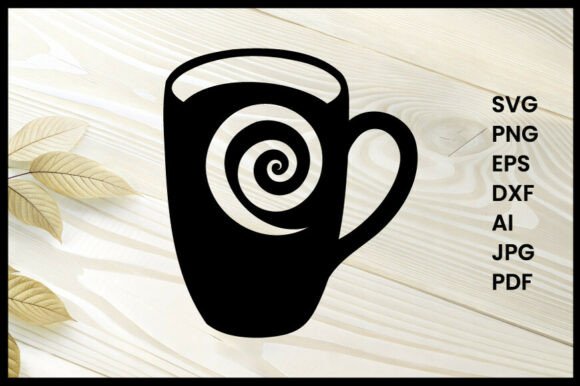
Coffee Mug with Swirl Illustration
A Clean, Quiet Statement—Not a Busy Decoration
First impression? This isn’t a loud, cartoonish mug design—it’s a confident, minimalist silhouette. The black-and-white swirl inside the mug reads as both elegant and approachable: a soft spiral, not a rigid coil; balanced weight, no awkward tapering or jagged edges. As an embroidery designer who’s stitched hundreds of beverage-themed motifs—from barista logos to whimsical latte art—I immediately sensed its quiet versatility. It doesn’t shout “coffee lover!” It invites that identity. That makes it ideal for products where subtlety builds trust: boutique aprons, linen tea towels, baby onesies for new parents who prefer understated nursery decor, or custom sweatshirts for small coffee roasters building brand cohesion.
Where It Shines in Real Embroidery Projects
I tested Coffee Mug with Swirl Illustration on a medium-weight cotton tote bag and a 100% combed cotton crewneck sweatshirt—both common staples for craft businesses and Etsy sellers. On the tote, the clean lines held beautifully with a standard tear-away stabilizer and 40-weight rayon thread. The swirl remained legible even at 3.2 inches wide—the sweet spot for side-panel placement. On the sweatshirt, I used cut-away stabilizer underneath and reduced stitch density slightly in the swirl area (a quick edit in my digitizing software), and the result was smooth, breathable, and professional. No puckering, no thread breakage.
It also translated well into a sew-on embroidered patch—ideal for craft fairs or branding kitchen towels for a local café. Because the design avoids fine linework or tight interior corners, it stitches reliably across fabric types: twill caps (with proper hooping and topping), lightweight linen pillow covers, and even baby swaddles (when paired with ultra-soft thread and minimal fill). For holiday embroidery—think personalized mugs wrapped in fabric sleeves or embroidered kitchen sets—it adds warmth without clutter. And for digital product sellers, it works cleanly in printable mockups: crisp in black on cream, equally strong reversed on charcoal.
Where Caution Is Necessary
This isn’t a one-size-fits-all embroidery file. Its strength is simplicity—but that same simplicity means it can disappear if misapplied. Avoid using Coffee Mug with Swirl Illustration on dark, textured fabrics like heavy terry cloth or bouclé without testing contrast first. A light thread on navy terry may vanish unless you add a subtle satin-stitch outline or switch to a tonal variegated thread. Likewise, skip it for curved surfaces like baseball caps unless you’re confident in your cap frame setup and willing to adjust underlay stitching manually.
Don’t force it into tiny hoop sizes (<3 inches) without verifying detail retention. The swirl’s flow depends on smooth curve definition—too much scaling down risks flattening the rhythm of the line. Also, avoid pairing it with dense applique designs nearby; this motif breathes best when given visual space. If you’re planning layered embroidery—say, a mug + steam + script text—this design should anchor the composition, not compete within it.
What It Adds to Your Finished Product
Customers notice intentionality. When someone sees this on a handmade apron, they don’t just see “coffee”—they register craftsmanship, calm focus, and care in editing. That perception lifts perceived value. For Etsy sellers, it supports cohesive shop branding: pair it with matching tea towel designs or minimalist spoon rest illustrations, and buyers start recognizing your visual language. For craft fair vendors, it reads as “designed, not downloaded”—especially when stitched with thoughtful thread choices and balanced density. And for personalized gifts? It lands softly but memorably: a new mom receives a linen onesie with this mug stitched near the hem—not cutesy, not generic, just quietly meaningful.
Practical Designer Notes Before You Stitch
- Always test on scrap fabric first—especially if using stretchy knits, fleece, or dark backgrounds.
- Check thread color contrast in natural light and under store lighting; black thread on black fabric won’t read, even if the vector looks sharp on screen.
- Review stitch density: high-density fill in the mug base can stiffen lightweight fabrics. Consider switching to a lighter fill stitch or reducing density by 10–15%.
- Confirm hoop size compatibility—some versions of this design may be optimized for 4x4 hoops, others for larger formats. Don’t assume.
- Inspect small details at actual stitch-out size: zoom in on the swirl’s termination point—is it cleanly closed or does it trail? That affects professionalism.
- Test it in black-and-white mockups before finalizing listings—many customers browse in grayscale mode or use accessibility settings.
- Compare performance on light vs. dark fabric backgrounds. A design that pops on ivory may recede on slate gray.
- Use appropriate stabilizer: tear-away for stable wovens, cut-away for knits, and topping (like water-soluble film) for napped or textured surfaces.
- Verify licensing terms before selling finished products or bundling it into digital embroidery files—this is critical for commercial embroidery and craft business use.
Final Thought: A Design That Serves the Maker
Coffee Mug with Swirl Illustration doesn’t try to do everything—and that’s why it works so well. It’s not flashy. It’s not packed with extras. It’s a focused, adaptable piece of design assets built for real-world making. Whether you’re stitching a single personalized gift or producing 50 embroidered kitchen towels for a local boutique, it delivers clarity, consistency, and quiet confidence. In the Crafts category, where authenticity and execution matter more than ornamentation, this is the kind of Graphics asset that earns repeat use—not because it’s trendy, but because it’s reliable. And for designers, small shop owners, and creative entrepreneurs, reliability is the rarest luxury of all.